
From Efficacy to Stability: Is Vitamin C Ethyl Ether Replacing Regular Vitamin C?
In today's rapidly developing functional skincare market, antioxidant and whitening effects remain core consumer demands. While traditional vitamin C (L-ascorbic acid) boasts excellent efficacy, its shortcomings—poor stability, difficulty in formulation, and potential for irritation—have limited its widespread use. Against this backdrop, vitamin C ethyl ether, possessing both high efficacy and stability, is gradually becoming a mainstream choice in the industry. So, is vitamin C ethyl ether replacing regular vitamin C?
I. Mechanism of Action
From a fundamental perspective, vitamin C ethyl ether and traditional vitamin C are highly consistent in their goals:
- Powerful antioxidant, neutralizing free radicals and combating photoaging
- Inhibiting tyrosinase activity, blocking melanin production at the source
- Promoting collagen synthesis, improving skin elasticity and radiance
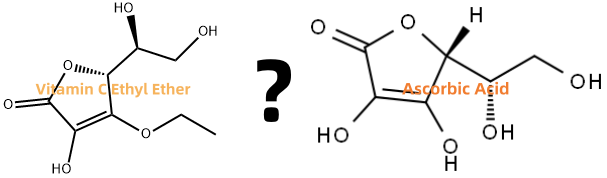
The core difference lies in their mechanisms of action. Traditional vitamin C requires a strongly acidic environment to maintain its active form and exert its effects directly, while vitamin C ethyl ether, through ethyl modification, forms a stable structure and is gradually converted into active vitamin C after penetrating the skin via enzymatic action. This "precursor-conversion" mechanism not only ensures the release of the final efficacy but also achieves a gentle, continuous, and controllable process, significantly improving the ingredient's tolerance and applicability.
II. Stability
Stability is the biggest challenge faced by traditional vitamin C:
- Extremely sensitive to light, heat, and oxygen, easily oxidizing and turning yellow
- Must maintain activity in a strongly acidic environment (pH ≤ 3.5)
- Complex formulation process, short shelf life, and demanding storage conditions
The molecular structure of vitamin C ethyl ether, through the introduction of an ethyl group, effectively protects the active site of vitamin C, giving it:
- Excellent chemical stability, not easily oxidized or discolored
- Wider pH adaptability (can be used in neutral to weakly acidic systems)
- Excellent thermal and light stability, extending product shelf life
This breakthrough not only reduces the difficulty of production, storage, and transportation but also ensures that vitamin C activity remains stable in the final product, guaranteeing that consumers still receive the expected efficacy when using the product.
III. Formulation Applications
The strong acidic nature of traditional vitamin C limits its application scenarios:
- Usually limited to low-pH serums
- May cause stinging and redness, unsuitable for long-term use on sensitive skin
- Limited compatibility with various active ingredients
Vitamin C ethyl ether, however, exhibits broader compatibility:
- Can be stably present in various formulations such as water-based solutions, emulsions, and creams
- Significantly reduced irritation, suitable for a wider range of skin types, including sensitive skin
- Possesses excellent compatibility, and can be combined with ingredients such as vitamin E, niacinamide, and peptides to build a multi-functional efficacy system.
This allows formulators to design products more freely and develop complex formulations with multiple functions such as whitening, anti-aging, and repair.
IV. Market Positioning: Not a Complete Replacement
The widespread application of vitamin C ethyl ether does not mean that traditional vitamin C will be completely replaced.
Traditional L-ascorbic acid: Still holds a unique position in high-concentration, immediate-effect professional or clinical products, serving specific needs and tolerant skin types.
Vitamin C ethyl ether: Has become the mainstream choice in daily skincare, long-lasting maintenance, and products suitable for sensitive skin, balancing efficacy, safety, and user experience.
The market is shifting from the pursuit of single, highly active ingredients to a preference for stable, gentle, and formulation-friendly efficacy systems. Vitamin C ethyl ether is a key technological carrier in this trend.
As consumers' demands for product safety, stability, and user experience continue to increase, and brands increasingly value supply chain reliability and formulation flexibility, stable vitamin C derivatives have become an irreversible industry trend. With its solid scientific basis, excellent stability, and wide applicability, vitamin C ethyl ether is continuously gaining market recognition, driving the entire antioxidant and whitening category towards a more mature and sustainable direction.
As a partner focused on the research and supply of functional ingredients, YTBIO deeply understands the complex market demands for ingredient stability, verifiable efficacy, and formulation support. We provide high-purity, high-quality Vitamin C ethyl ether raw materials and look forward to collaborating with brands and manufacturers to jointly develop the next generation of skincare products that combine scientific efficacy with exceptional user experience.
For detailed technical information, COA documents, or sample requests, please feel free to contact us:
Email: sales@sxytbio.com